
AI Chatbot Platform for Business
No-code platform with NLP, seamless integrations, and multi-channel deployment.


Client
In 2016, the client had an idea to create a chatbot platform: a simple business tool that could be set up and used without an in-house developer. The goal was to launch a free version, capture a niche market, and monetize the product through paid features such as premium templates and third-party integrations.
The idea looked promising for its time. Similar platforms were only beginning to emerge. We evaluated the concept, estimated the scope, considered potential complexities, and moved forward with development.


Challenges
The first challenge was speed. The MVP had to reach production faster than competing solutions. The next step was continuous feature development and product expansion.
We already had solid experience in Data Science and machine learning, but this was our first time building a product of this kind.
Within a tight timeline, we needed to deliver an MVP platform with NLP support and a foundation for further feature expansion.
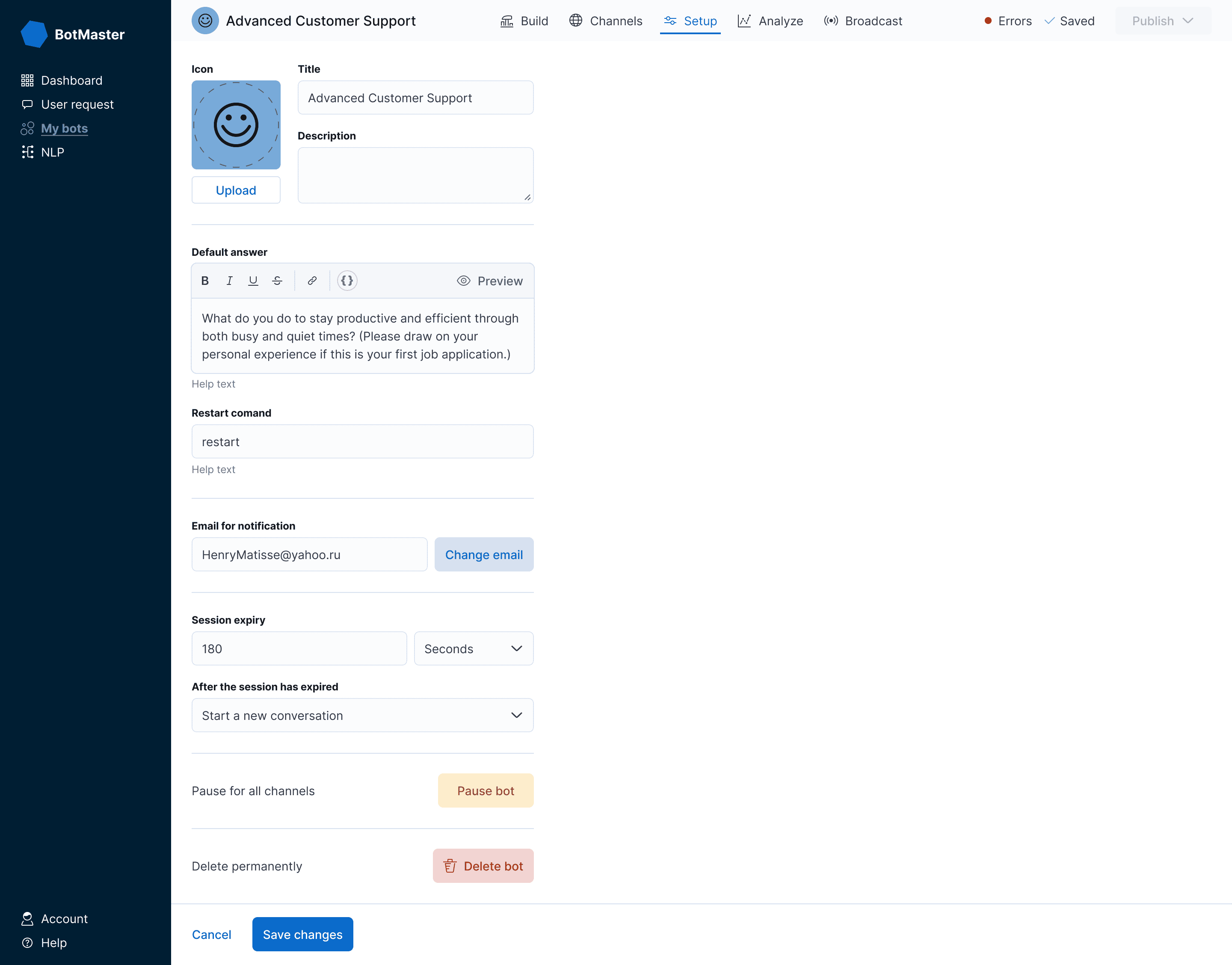
1. Realistic Conversational Interaction
In 2016, communication automation was largely handled through interactive voice response (IVR) systems. However, IVR, with its rigid response options and hierarchical call routing, was far from ideal.
Users came in with specific questions but were routed into IVR flows. In most cases, they had to go through multiple layers of menus. Prospects are not willing to wait. They hang up and never come back. These limitations were driving the market toward more flexible solutions, particularly chatbot systems powered by NLP.
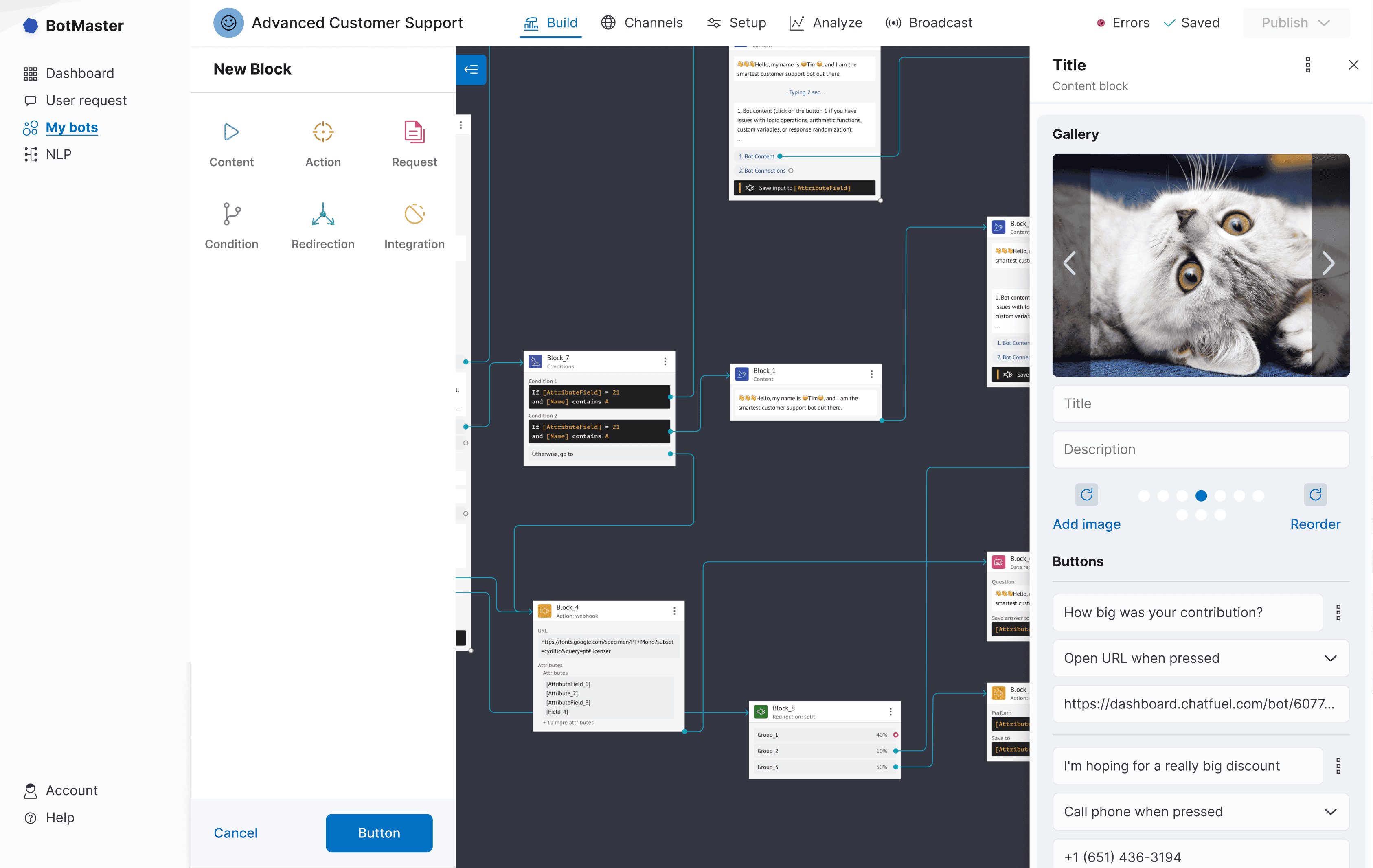
2. Omnichannel Support
There were only a few competitors on the market at the time, and even those had a clear limitation: each communication channel required a separate bot.
Another key requirement for us was omnichannel support. Businesses using the platform should be able to build a single bot and deploy it across all channels.
How We Built the Solution
NLP for Conversational AI
To address these challenges, we chose a natural language processing (NLP) approach. NLP uses machine learning to process both text and speech.
This allows chatbots to move beyond predefined scripts and handle conversations more flexibly, closer to how people actually communicate.
Multi-Channel Integration
We added support for the most common communication channels:
– Website widget
– Social media and messaging platforms (Facebook, Telegram, Skype, Slack, LINE, Viber)
– Email
– SMS
– Zendesk integration
Users can create a bot once and reuse it across different channels, adapting it to each platform. Even when multiple channels are in use, all conversations are managed in a single interface.
Expanded NLP Capabilities
We extended the NLP engine with a wide range of features designed to handle different communication scenarios. Feature ideas were developed together with the client and refined based on user feedback. A classic MVP approach that proved effective in this case.
Key additions included:
– Speech recognition and synthesis
– Intent recognition
– Data extraction and transformation
– Advanced analytics
– Media processing
Ultimately, the chatbot’s functionality depends on the capabilities of the platform it integrates with, whether it’s a website, social network, or messaging app.
Multiple Interaction Scenarios
Bots built on the platform were not meant to be limited to text alone. We expanded the range of supported interactions to make communication more flexible.
Users can submit requests in the way that suits them best: by typing a message, making a call, or sending a screenshot or photo. The bot processes the input and returns a relevant response in real time.
Customization Options
Full customization requires additional development, but the platform allows flexible configuration of both interaction flows and interface elements to match business needs.
Technologies
Backend
Go
Backend
Python
Frontend
Angular 8
Cloud Infrastructure
AWS
Containerization
Docker

Orchestration
Kubernetes

Database
PostgreSQL

Database
ClickHouse
NLP
NLTK
Machine Learning
TensorFlow
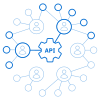
External APIs
Social networks, Messengers
Result
The idea proved effective. Creating a bot takes little time, does not require deep technical expertise, and lowers the entry barrier compared to custom development. The platform’s capabilities, combined with its ease of use, make it suitable for businesses of any size.
The numbers reflect the scale. Today, the platform reaches up to five billion users, across websites, email clients, and SMS campaigns.
The product remains active, continues to evolve, and generates steady revenue through a freemium model and paid integrations. Small and mid-sized businesses use the free version, while larger companies looking for more tailored solutions opt for paid customization.
Later, at the client’s request, we also developed a messaging app that was integrated into the core product.
communication channels and services integrated.

to accelerate time to market for the MVP.
installations across websites, email clients, and SMS campaigns.

What happens next:
Having received and processed your request, we will reach you shortly to detail your project needs.
After examining requirements, our analysts and developers devise a project proposal with the scope of works, team size, time and cost estimates.
We arrange a meeting with you to discuss the offer and come to an agreement.
We sign a contract and start working on your project as quickly as possible.